


As part of our ongoing Think Twice Media Literacy Campaign, these four infographics explore the journey of false information online: why people share it, when and where it spreads, how it takes root, and why it is created in the first place.
By understanding these steps, we strengthen our ability to think critically and protect our communities from manipulation.
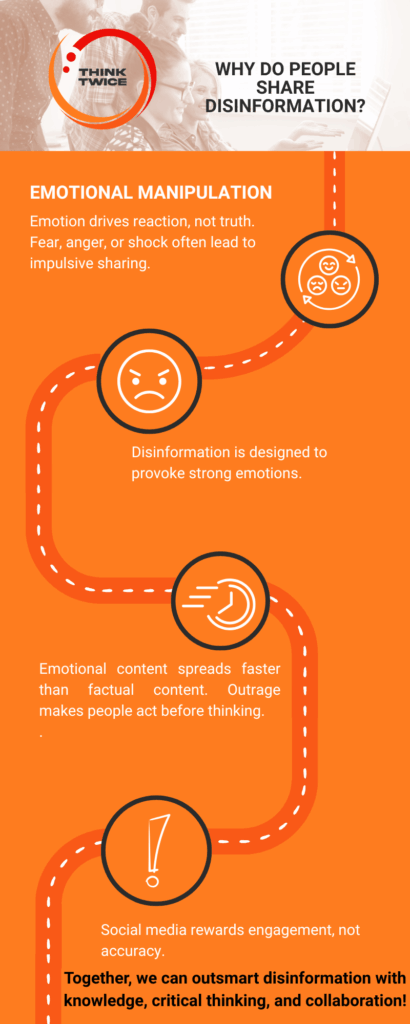
1. Why Do People Share Disinformation?
The first infographic focuses on emotional manipulation, one of the strongest drivers of false information.
Disinformation is designed to trigger strong reactions such as fear, anger, or shock.
Recognizing emotional triggers helps us pause, reflect, and check the facts before passing content along.
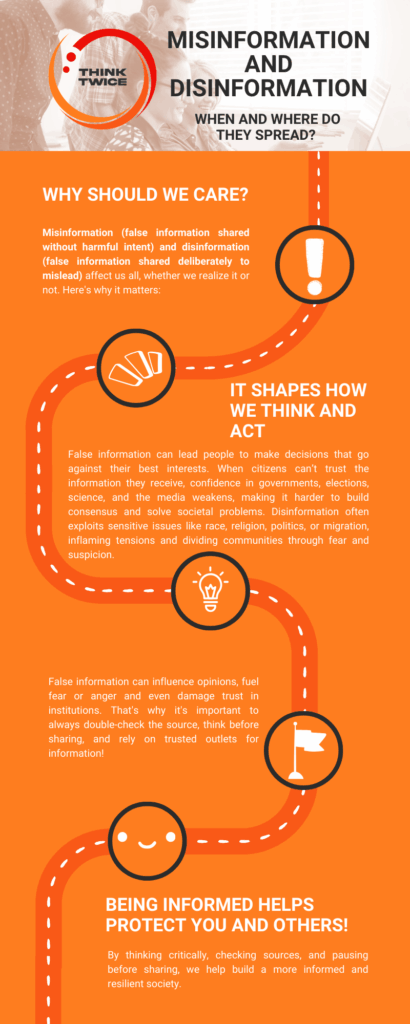
2. When and Where Does False Information Spread?
Misinformation and disinformation spread fastest in moments of uncertainty:
- breaking news
- crises and emergencies
- emotionally charged social issues
False information thrives in digital spaces where speed matters more than accuracy, especially on social media and messaging apps.
Being informed and cautious helps protect both ourselves and others.
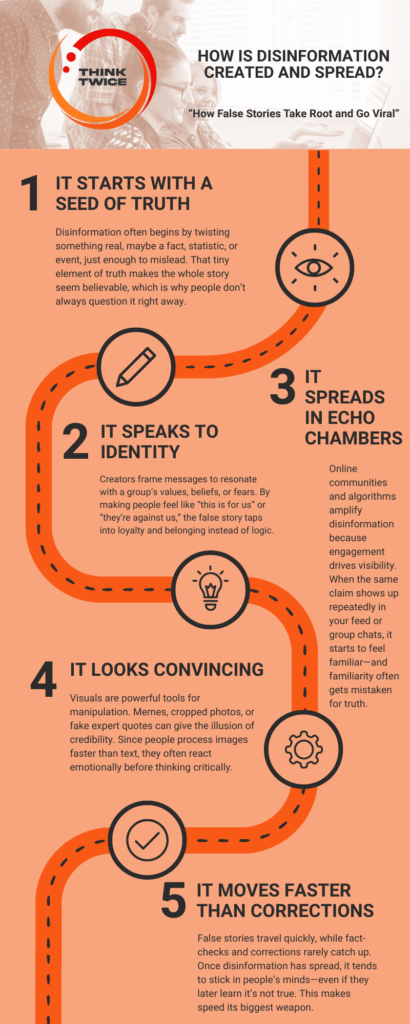
3. How Is Disinformation Created and Spread?
False stories often follow a predictable pattern:
- A seed of truth – just enough real information to seem believable.
- Identity appeal – messages crafted to align with values or fears.
- Echo chambers – algorithms and social groups amplify repeating narratives.
- Convincing visuals – edited images, memes, or fake quotes increase credibility.
- Speed over accuracy – false claims spread long before corrections can catch up.
Once a false story begins to circulate, it can feel familiar, and familiarity is often mistaken for truth.
4. Why Is Disinformation Created?
The final infographic explains the deeper motives behind intentional falsehoods:
Disinformation is a powerful tool used to shape public opinion, control narratives, and influence society.
It’s often designed to reinforce beliefs, trigger emotional reactions, or distract from important issues.
By recognizing these tactics, we become more aware, more informed, and less likely to fall for manipulative content.

Think Twice — Stay Informed, Stay Critical
Understanding why, when, where, and how false information spreads empowers us to make smarter decisions online.
Together, we can build a more informed and resilient digital environment.
Think Twice. Verify before you share.