



As part of our ongoing Think Twice Media Literacy Campaign, this series of infographics uncovers how disinformation is crafted, why it exists, what forms it takes, and who ends up spreading it.
Understanding these patterns helps us become more resilient, critical, and informed digital citizens.
1. How Is Disinformation Created and Spread?
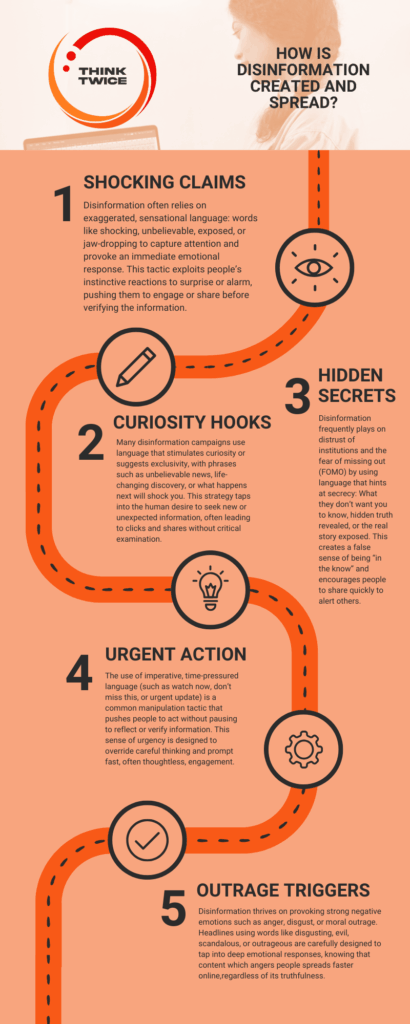
The first infographic explores the tactics behind disinformation — the emotional triggers and strategic language designed to make false content go viral:
- Shocking claims – sensational, exaggerated headlines meant to grab attention.
- Curiosity hooks – “unbelievable news” or “you won’t believe what happens next.”
- Hidden secrets – messaging that implies exclusivity or secrecy (“what they don’t want you to know”).
- Urgent action – time-pressured instructions pushing people to react before thinking.
- Outrage triggers – content crafted to provoke anger or disgust, increasing rapid sharing.
These tactics exploit human emotions, making us more likely to share content before verifying it.
2. Why Do People Create Disinformation?
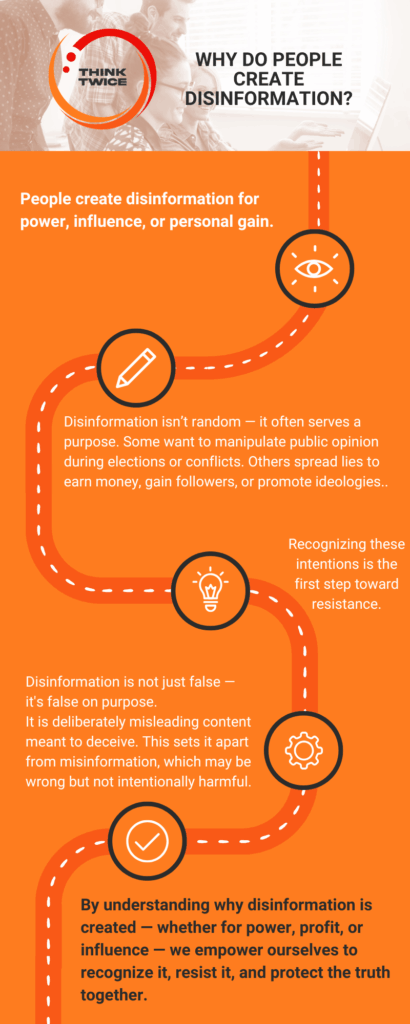
The second infographic explains the motives behind intentional falsehoods:
- Power – influencing public opinion or shaping political outcomes.
- Influence – controlling narratives or spreading certain ideologies.
- Personal gain – earning money, attention, or followers.
Disinformation is not an accident — it is false on purpose, carefully designed to mislead.
Recognizing why false narratives are created empowers us to resist manipulation and protect truthful information.
3. What Is Misinformation and Disinformation?
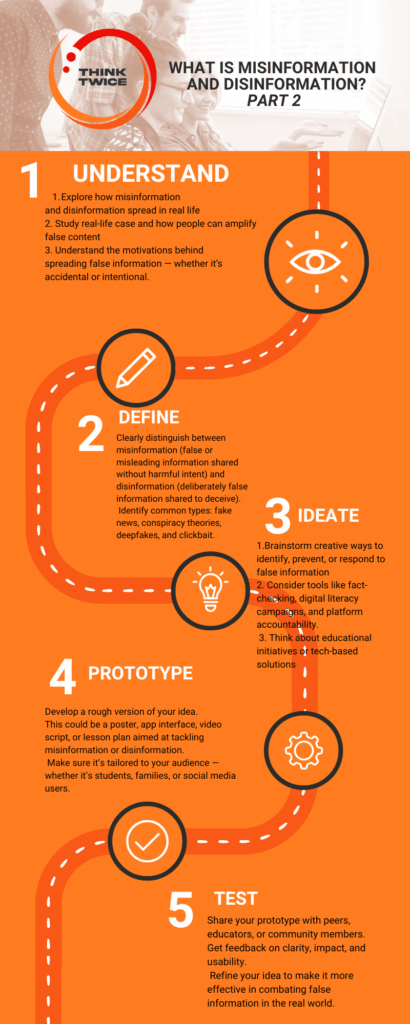
This infographic breaks down what false information actually is and how we can respond to it:
- Understand how misleading content circulates in real life.
- Define the difference between misinformation (unintentional) and disinformation (intentional).
- Identify common types: conspiracy theories, fake news, deepfakes, clickbait.
- Ideate creative ways to detect and counter false content.
- Prototype & test solutions such as lessons, tools, or campaigns.
It encourages active participation in building awareness and strengthening media literacy skills.
4. Who Creates and Spreads Disinformation?
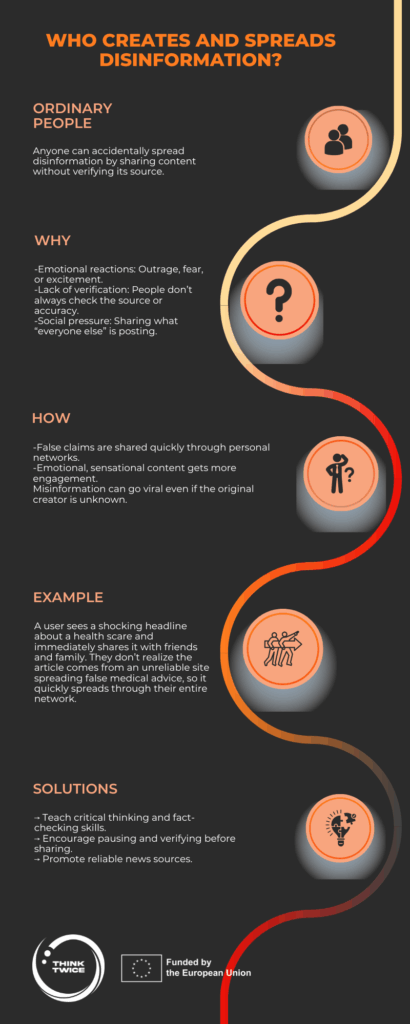
This infographic reminds us that disinformation isn’t spread only by those who create it — ordinary people often share false content without realizing it.
People may share misleading posts because they react emotionally, don’t check the source, or feel influenced by what others are sharing. As sensational content travels quickly through personal networks, misinformation can go viral even when its origin is unclear.
To reduce this, we can think critically, verify before sharing, and choose reliable information sources.
Together, We Can Slow the Spread of False Information
By understanding how disinformation is created, why it exists, what forms it takes, and who spreads it, we can protect ourselves and our communities from manipulation.
Let’s continue building a more informed, thoughtful, and responsible digital environment.
Think Twice. Verify before you share.