



As part of our Think Twice Media Literacy Campaign, these four infographics/videos break down the full cycle of false information online — how it’s created, why it exists, what it looks like, and who spreads it.
Understanding these steps helps us recognize manipulative content, think critically, and make safer decisions in our digital lives.
1. How Is Disinformation Created and Spread?
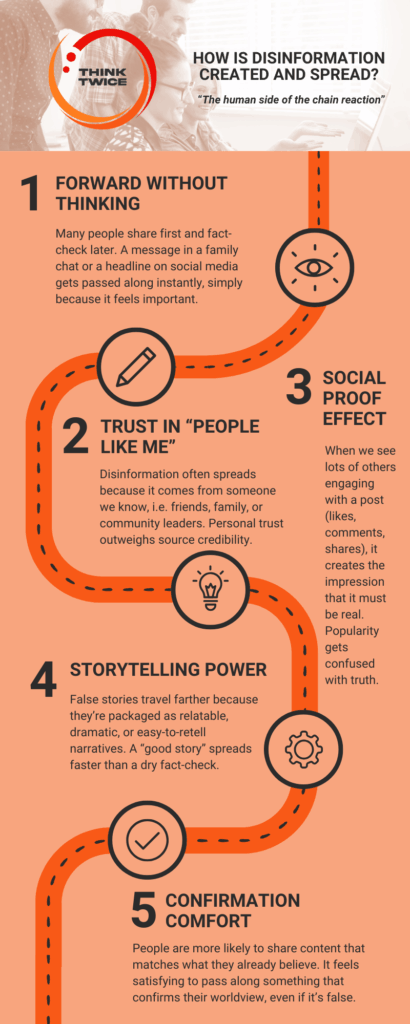
This first infographic shows the human side of how false stories travel:
- People share without thinking — headlines or messages are forwarded instantly, before facts are checked.
- Trust in “people like me” — content shared by friends or familiar figures is believed more easily than official sources.
- Social proof — when many people like or share a post, it appears true.
- Storytelling — dramatic or emotional narratives spread faster than dry facts.
- Confirmation comfort — people share what matches their existing beliefs.
Disinformation spreads not because it’s accurate, but because it feels familiar, emotional, and easy to pass along.
2. Why Is Disinformation Created?
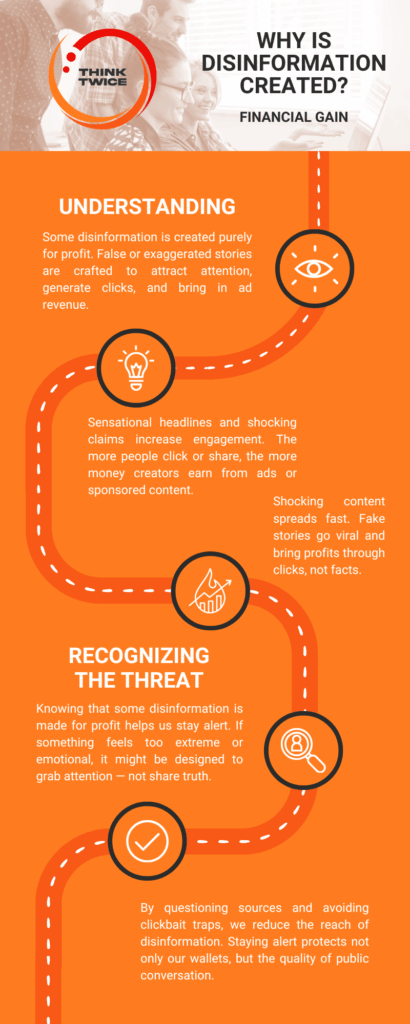
The second infographic explains that sometimes false information is produced for profit:
- Sensational headlines attract clicks.
- Viral stories bring in ad revenue.
- Exaggerated or shocking claims increase engagement.
- Fake “expert” content is used to grab attention, not share truth.
By recognizing clickbait and emotional manipulation, we can reduce the reach of profit-driven falsehoods — and protect both our wallets and public conversation.
3. What Is False Information?
Part three highlights that not all false information is the same:
Misinformation
– Shared by mistake
– Person believes it’s true
– Still harmful — others may act on it
Disinformation
– Created intentionally
– Designed to mislead or manipulate
– Can damage trust, fuel conflict, or influence public opinion
Understanding this difference helps us respond appropriately and stop harmful content before it spreads.
4. Who Creates and Spreads Disinformation?
The final video reveals key actors involved:
- Conspiracy groups — challenge science, question truth, spread fear
- Motivations — distrust in institutions, desire for control, ideological beliefs
- Methods — private forums, viral videos, misinterpreted data, persuasive “experts”
- Real example — a viral video misreading cloud shapes becomes a trending “weather conspiracy”
What we can do:
- Teach source evaluation
- Promote critical thinking
- Encourage respectful dialogue
- Build trust in science and institutions
Not everything we see is true — but we can learn to spot what’s false.
Think Twice — Check Your Sources
By understanding how false information spreads, why it’s created, what forms it takes, and who pushes it forward, we become stronger, more informed digital citizens.
Think Twice. Verify before you share.