



As part of our ongoing Think Twice Media Literacy Campaign, these four infographics help explain the full picture of how false information moves through our digital world.
Understanding these steps empowers us to recognize harmful content, think critically, and strengthen our communities against manipulation.
1. What Is False Information?
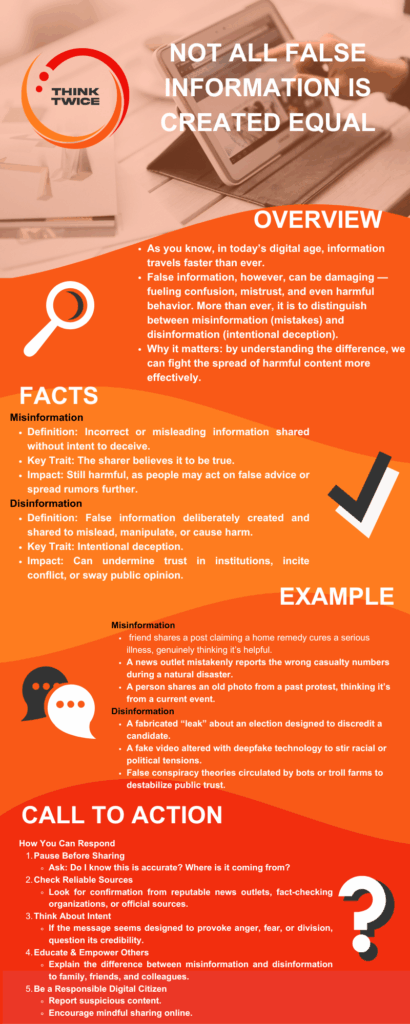
The first infographic breaks down the difference between two major types of false information:
Misinformation
- Incorrect or misleading content shared without intent to deceive
- Often spread because the person believes it’s true
- Still harmful, people may act on false advice or repeat false claims
Disinformation
- False content created intentionally to mislead
- Designed to manipulate, influence, or cause harm
- Can damage trust, incite conflict, or shape public opinion
Knowing the difference helps us respond properly and stop harmful content before it spreads.
2. Who Creates and Spreads Disinformation?
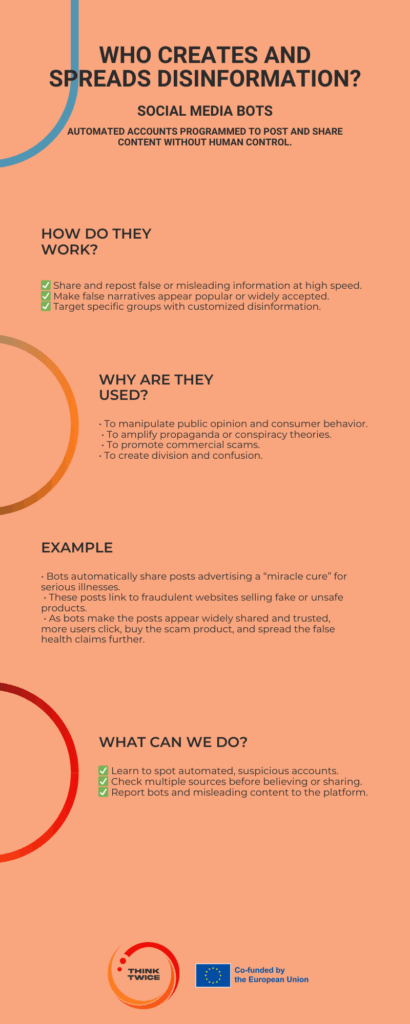
The second infographic reveals an important actor in the spread of false information: social media bots — automated accounts that post and share content without human involvement.
Why they’re used
- To manipulate public opinion
- To promote propaganda, scams, or conspiracy theories
- To create division, confusion, and mistrust
Recognizing bot activity helps us avoid being influenced by automated manipulation.
3. Why Do People Share Disinformation?
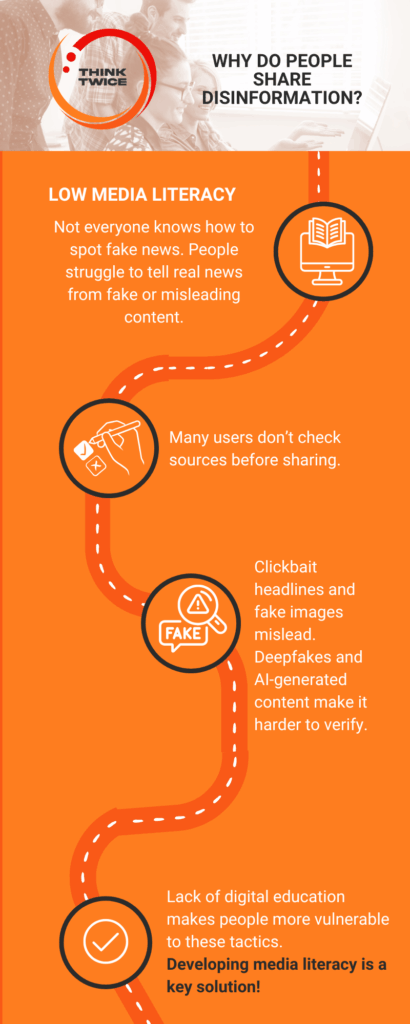
The third infographic highlights a key reason false information spreads so easily: many people don’t know how to recognize it.
- Users often don’t check sources before sharing
- Clickbait headlines and fake images mislead quickly
- Deepfakes and AI-generated content look increasingly real
- Lack of digital education makes people vulnerable to manipulation
Improving media literacy is one of the most powerful ways to reduce the spread of false information.
4. When and Where Does False Information Spread?
The final infographic explains the environments where false information spreads most quickly:
Where it spreads
- Social media (Twitter/X, Facebook, TikTok, YouTube)
- Private messaging (DMs, WhatsApp, group chats)
- TV/radio talk shows with polarizing narratives
- Low-credibility websites
- Everyday conversations in communities, schools, and families
What we can do
- Pause before sharing
- Ask: “Is this credible? Who benefits from this message?”
- Read beyond the headline
- Support and share reliable news sources
Being informed helps protect both you and your community.

Think Twice — Together We Can Slow the Spread of False Information
By understanding what false information is, who spreads it, why people share it, and where it spreads fastest, we gain the tools needed to navigate the digital world safely and responsibly.
Think Twice. Verify before you share.