


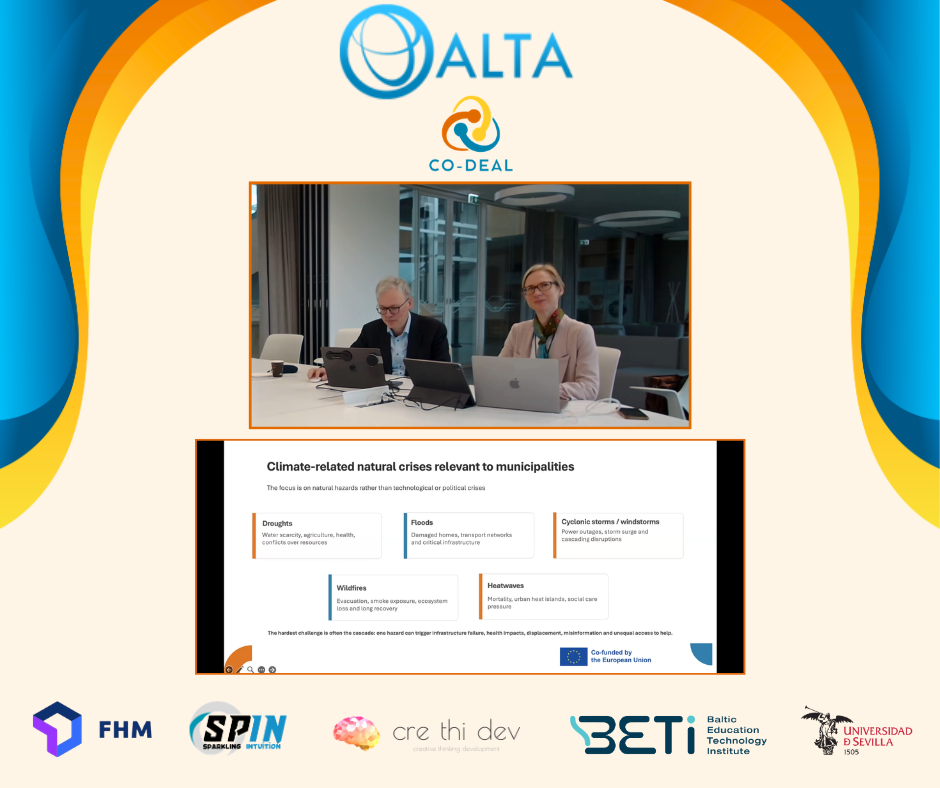
On May 13, insights from the CO-DEAL project were presented at the international ALTA conference. The presentation, titled Municipal Training for More Effective Management of Climate Change-Related Crises, focused on the role of municipal training in strengthening preparedness, coordination and resilience in response to climate-related natural hazards.
The presentation addressed the growing challenges municipalities face as climate-related crises become more frequent and complex. Natural hazards such as floods, heatwaves, droughts, windstorms and wildfires can have significant effects on local communities, infrastructure, public services and vulnerable groups. In this context, municipalities play a central role in anticipating risks, preparing local systems, communicating with communities, coordinating response actions and supporting recovery.
The CO-DEAL project was introduced as an initiative aimed at enhancing community participation and resilience before, during and after crises. Through the development of practical training, learning materials and virtual simulations, the project seeks to strengthen the capacity of municipal employees and related public-sector stakeholders to respond to climate-related crises in a more effective, inclusive and coordinated way.
The presentation also shared insights from a systematic review on organizational and community preparedness and resilience. The findings highlighted the importance of locally adapted interventions, community participation, empowering education and scenario-based learning. Particular attention was given to the need for training that goes beyond information-sharing and supports practical skills, decision-making, interdepartmental coordination and inclusive communication.
A key message of the presentation was that municipal training should not be treated as a one-off activity. Instead, it should be embedded into wider crisis management and climate adaptation efforts, helping municipalities turn plans into shared practice and strengthening their ability to respond to complex and cascading challenges.
We thank all participants who joined the session and contributed to the discussion!