


Today, more than ever, misinformation and disinformation spread quickly across our digital spaces. To help communities better understand how false information works, and how we can prevent it, we created the Think Twice Media Literacy Series.
Below, you’ll find four infographics that break the topic down into simple, practical steps.
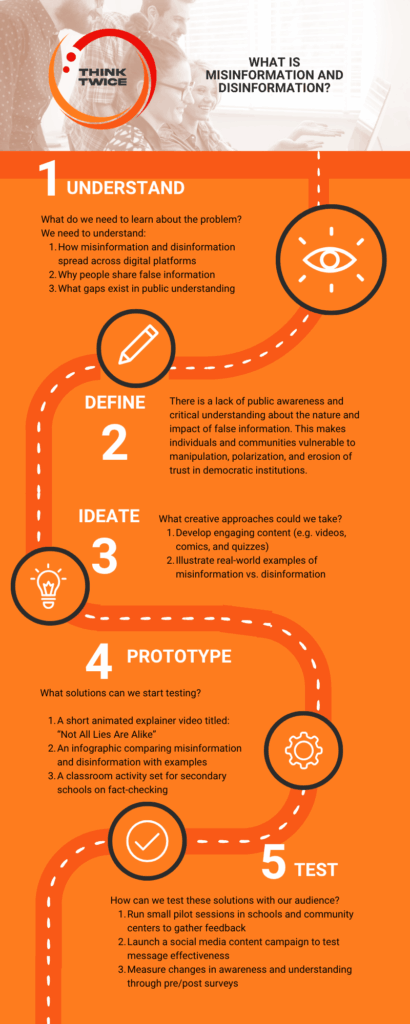
1. What Is Misinformation and Disinformation?
This infographic introduces the basics:
- How false information spreads
- Why people share it
- What gaps exist in public understanding
It walks through the process of learning, defining the problem, creating ideas, building solutions, and testing them in real settings.
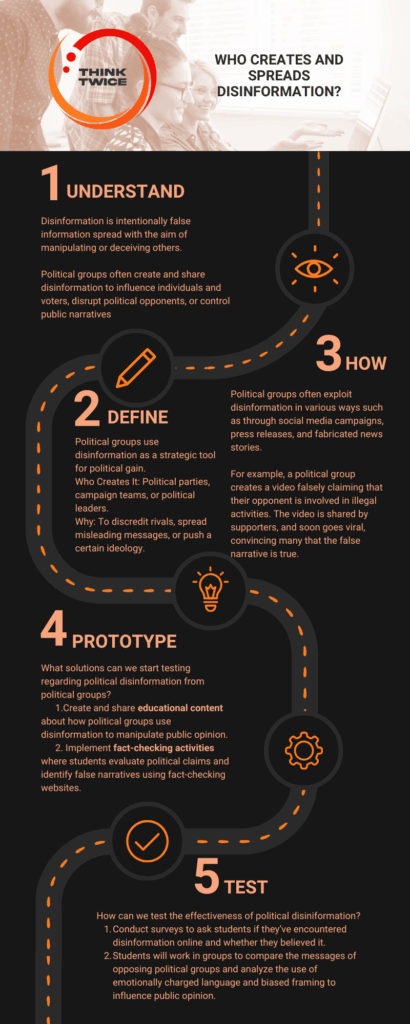
2. Who Creates and Spreads Disinformation?
Here, we explore how disinformation is intentionally crafted to influence public opinion.
You’ll see:
- Why certain groups create disinformation
- How it circulates
- Real-world examples
- Practical tools like fact-checking activities and educational content to help people recognize manipulative tactics
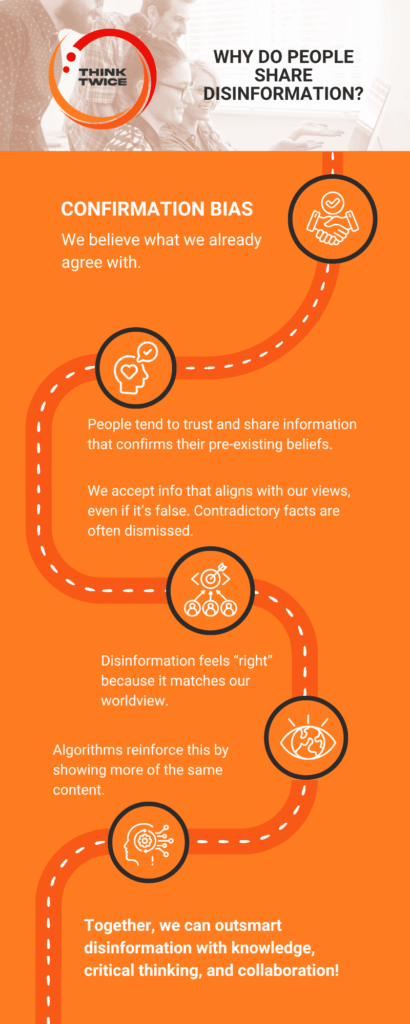
3. Why Do People Share Disinformation?
This infographic focuses on confirmation bias – the tendency to believe things that align with what we already think.
It explains how:
- Algorithms reinforce our beliefs
- False information can feel “right” even when it isn’t
- Critical thinking and awareness can break the cycle
It ends with a reminder that collaboration and informed thinking help us outsmart disinformation.
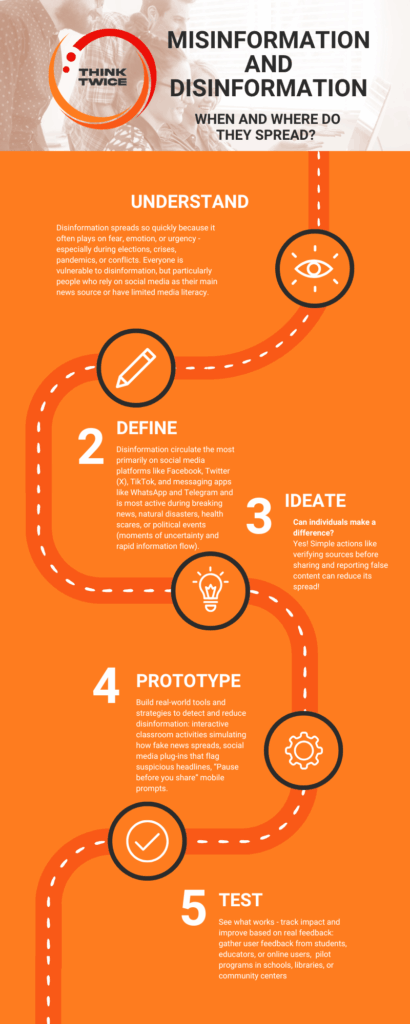
4. When and Where Does Disinformation Spread?
This final infographic highlights the conditions that allow disinformation to spread rapidly, such as during crises, breaking news, or political events.
It also shows:
- Where misleading content travels fastest (social media and messaging apps)
- The role of uncertainty and emotion
- Simple actions like verifying sources or using fact-checking tools
- How communities can test and improve real-world solutions
Together, We Can Strengthen Media Literacy
These resources are designed to spark awareness, conversation, and practical action. By learning how misinformation works, and how we can counter it, we build stronger, more resilient communities.
Feel free to explore, share, and use these infographics in classrooms, workshops, and community programs.
Let’s Think Twice, stay informed, and support each other in navigating today’s information landscape.